In Oulu, Bitcoin Miners Are Selling Their Waste Heat to Tomato Growers
On the edge of the Gulf of Bothnia, a 14-megawatt mining hall now warms a greenhouse through the dark Finnish winter. The arrangement is saving both sides money, and it is attracting copycats.
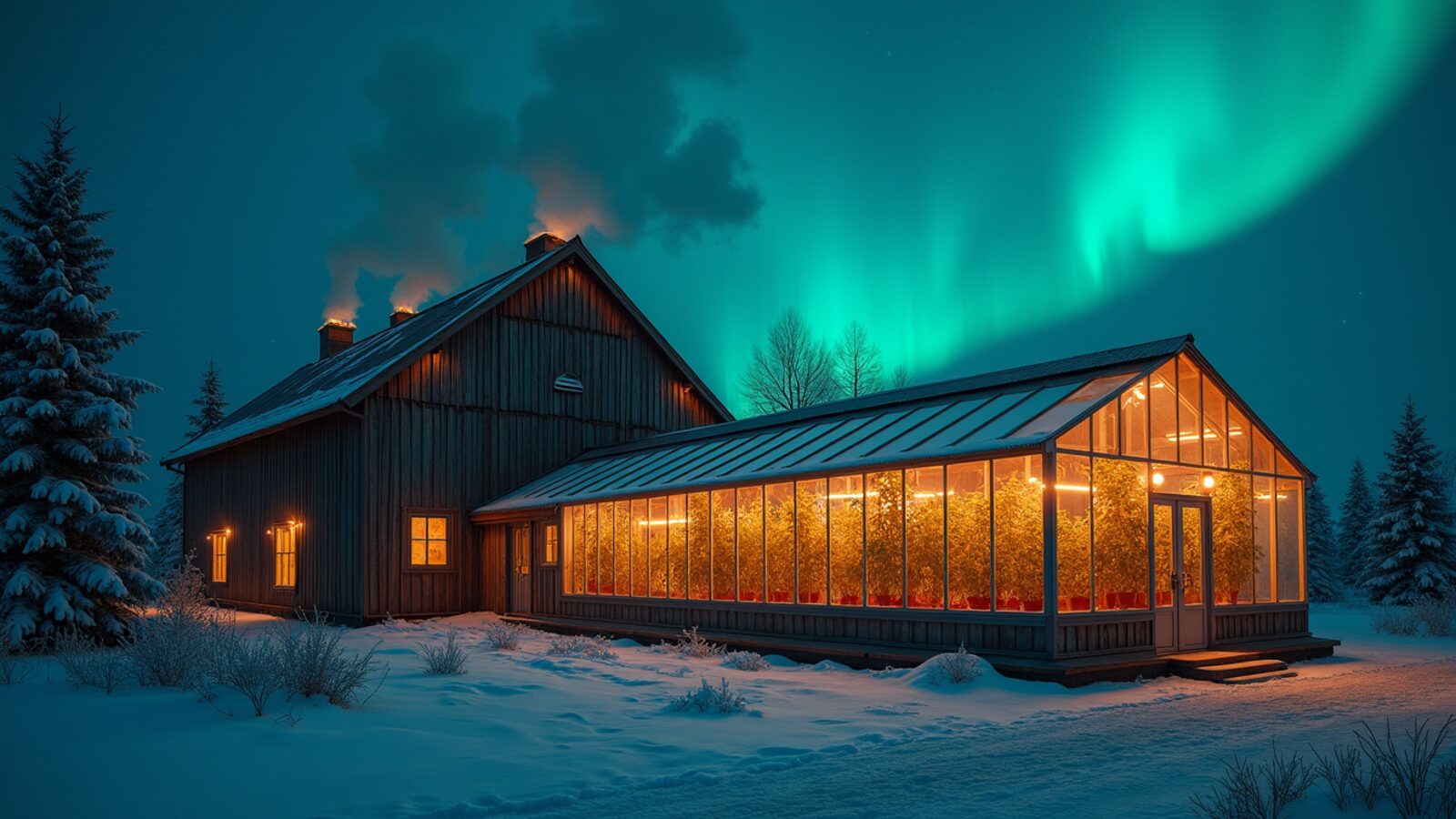
The first thing you notice at the Kalliosaari site is the sound. A low, continuous roar leaks from a windowless steel building, and 200 metres away it fades into the hush of a greenhouse where 40,000 tomato plants are growing under pink-white LED light. Outside it is minus 17 degrees Celsius. Inside the glass it is a steady 21.
The two buildings are connected by a pair of insulated pipes the width of a dinner plate. Water heated by 14 megawatts of Bitcoin mining machines flows one way. Cooler water returns the other. It is, says site manager Aino Vuorela, “the least glamorous piece of engineering we have ever been proud of.”
How the Arrangement Works
The mining hall belongs to Harjula Compute, a company founded in 2022 that runs about 3,800 machines. Traditional air-cooled rigs dump heat into the atmosphere. Harjula switched to immersion cooling, in which machines sit in tanks of dielectric fluid, and the fluid passes through heat exchangers that warm a closed water loop.
That loop feeds the greenhouse operator, Nordlys Growers, which previously burned wood chips and natural gas to keep its 3.2 hectares of glass above freezing. Nordlys now buys heat from Harjula at a price indexed to a regional district-heating tariff, discounted by roughly 30%. Vuorela says the heat covers about 70% of the greenhouse’s winter demand. The boiler is still there for the coldest weeks and for maintenance.
“We stopped thinking of heat as exhaust and started thinking of it as a second product.” — Aino Vuorela, site manager
For Harjula, the second revenue line is modest but meaningful. Company filings describe heat sales as covering around 6% of operating costs. In a year when mining margins have been squeezed by a higher network difficulty, that matters less for the headline number than for the shape of the business: it is a hedge that pays when the bitcoin price is weak.
Why Finland, and Why Now
Finland has become an unlikely centre for the idea. Electricity prices in the north are low and volatile because of wind output, the grid is clean, and district heating is common in towns of all sizes. Municipal planners are used to the notion that a facility’s thermal output can be a utility.
Local officials are watching closely. “We have a surplus of cold and a shortage of cheap heat,” says Elina Rautio, an energy adviser to the Oulu regional development agency. “If a data centre of any kind can plug into that, we will help with permits. Whether it mines bitcoin or trains models is secondary.” She adds that her office has fielded six similar enquiries this year, up from one in 2024.

The economics have limits. Immersion systems cost more to install than fans and open racks, by Harjula’s estimate about 25% more per megawatt. Heat is also worth far less than electricity: the water leaves the loop at around 55 degrees, enough for greenhouses, swimming halls and some drying processes but not for industrial steam. And a mining hall that follows the price of power does not always run at full tilt, while a greenhouse wants warmth every night.
To smooth that mismatch, Harjula installed a 3,000-cubic-metre insulated water tank. It acts as a thermal battery, holding enough heat to carry the greenhouse for roughly 30 hours if the miners curtail during a price spike.
What Skeptics Say
Not everyone is convinced the model scales. Mikael Sandström, an analyst who tracks Nordic data-centre projects, notes that the best sites need three things in close proximity: cheap power, a heat buyer and a grid connection with spare capacity. “That triangle is rarer than the press releases suggest,” he says. “Most of the miners I speak to would happily sell heat. They simply have no neighbour who wants it.”
There is also the question of what the arrangement does and does not change. Heat reuse reduces the greenhouse’s fossil fuel use, but it does not reduce the mining hall’s electricity consumption, which remains the central environmental objection to proof-of-work. Harjula’s 14 megawatts is the equivalent of roughly 7,000 Finnish households’ average load. Vuorela does not dodge the point. “We are not claiming to make bitcoin green,” she says. “We are claiming to waste less of what we already use.”
The Numbers on the Ground
The greenhouse tells its own story. Nordlys reports that its winter fuel bill fell by about €410,000 in the first full season. It has also begun year-round production of a premium cherry tomato, sold to supermarkets in Helsinki and Stockholm under a “heated by Bitcoin” sticker that, to the owners’ surprise, has not hurt sales.
Key figures from the first year:
- Heat delivered: about 38 gigawatt-hours
- Fossil fuel displaced: an estimated 3,100 tonnes of CO2-equivalent
- Added capital cost for immersion cooling and piping: €5.8 million
- Projected payback on the heat link alone: seven to nine years
A second site is planned 90 kilometres south, next to a fish-processing plant that needs warm water year-round. Vuorela walks back toward the roaring hall, boots crunching on frozen gravel. Behind her the greenhouse glows pink against the early dark, the only warm thing for kilometres. “Ten years ago nobody would have believed this,” she says. “Honestly, five years ago I wouldn’t have either.”

Nova covers mining, energy and market infrastructure, with a background in commodities reporting at a regional business daily. She is based in Austin, Texas.
Conversation (…)
One briefing. Every morning. Free.
Join readers who start the day with Crypto Beacon: the essential Crypto & web3 stories, curated by our editors.